A quark-gluon plasma is the state of matter thought to have filled the universe in its first microseconds. Physicists recreate it by smashing atomic nuclei together, and one sign that it has formed is jet quenching: sprays of energetic particles lose energy as they push through the hot, dense matter.
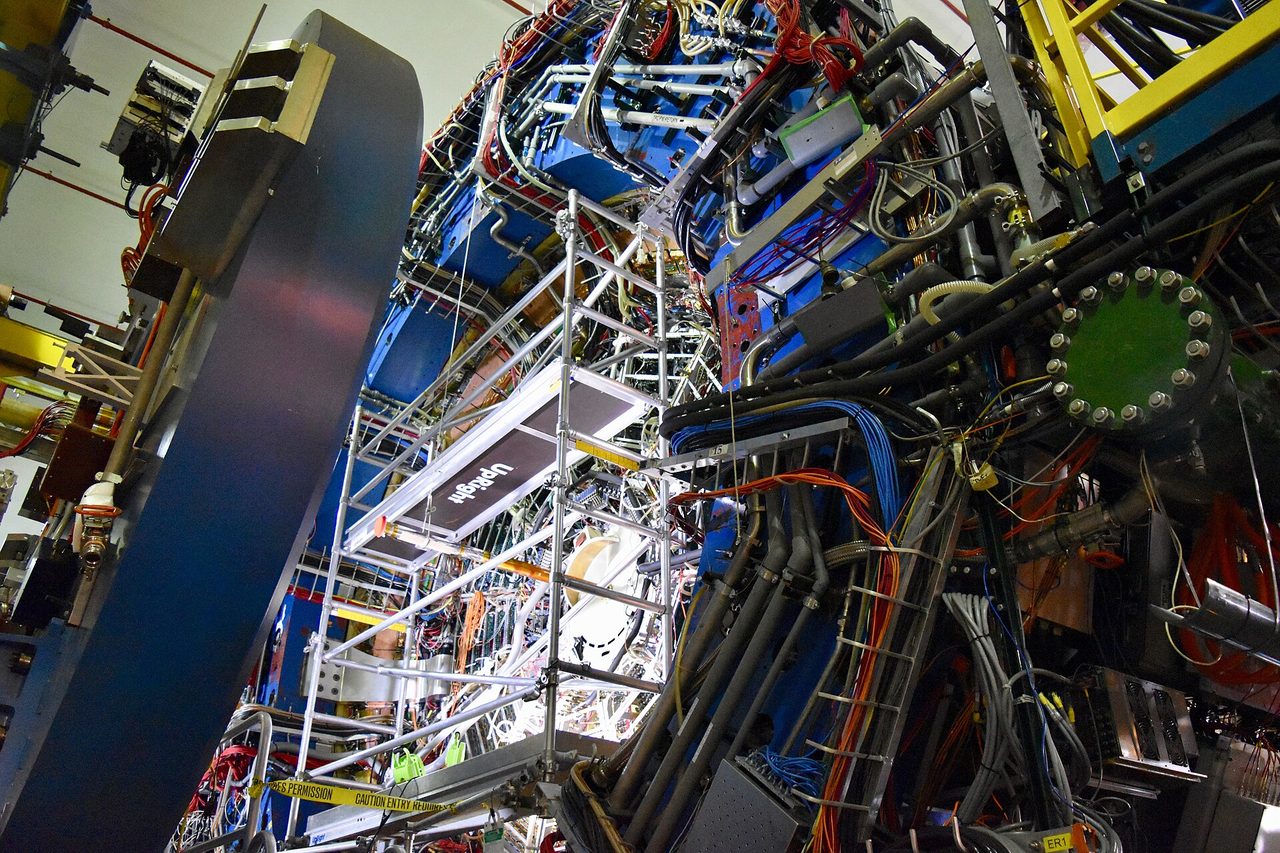
The STAR experiment at the Relativistic Heavy Ion Collider, at Brookhaven National Laboratory in the United States, has now seen that sign in collisions of oxygen nuclei, which hold just 8 protons and 8 neutrons each. Its data, taken in 2021 at 200 billion electron volts, show a 20% suppression of high-energy particles.
That is less than in gold collisions, as expected for a much smaller system, and the Large Hadron Collider's oxygen collisions ran above 5,000 billion electron volts. The new result therefore sets a lower boundary for the conditions that can produce this plasma in a small system.
The collider stopped running earlier this year, and its final oxygen collisions ended on 6 February 2026. More results are expected from that run. The paper appears in Physical Review Letters.
Our subject page for natural sciences lists routes that fund a master's or PhD in fields like this one.