
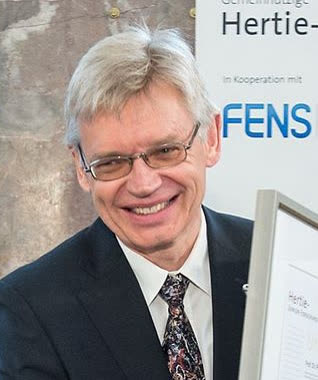
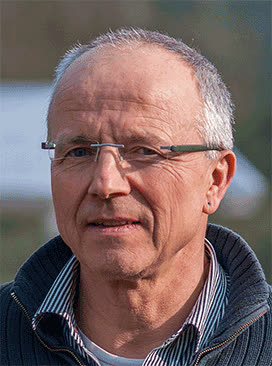
The 2026 Nobel Prize in Physiology or Medicine goes to Karl Deisseroth, Peter Hegemann and Georg Nagel for discovering light-gated ion channels and developing optogenetics, a way of switching nerve cells on and off with light. The Nobel Assembly at Karolinska Institutet announced the prize on 5 October, and the three share 12 million Swedish kronor equally.
The story begins with Chlamydomonas, a single-celled green alga that swims towards light. Peter Hegemann wanted to know how it senses that light. In the early 2000s he and Georg Nagel found the answer in a protein on the alga's surface, channelrhodopsin. When blue light falls on it, a channel opens through the protein, charged ions flow into the cell and an electrical signal follows. Whatever cell they put the protein into became sensitive to light. The work was done at Max Planck institutes in Germany: Hegemann's in Martinsried and Nagel's in Frankfurt.
Karl Deisseroth then put the gene for channelrhodopsin into nerve cells from rats. Shining blue light on the cells made them fire. He published the result in 2005, and two years later had the same light switch working in the brains of living mice.
Before optogenetics, researchers could link areas of the brain to functions, but they struggled to prove cause and effect. Being able to switch chosen nerve cells on and off changed that. The method has been used to trace the circuits behind particular memories, feelings and behaviours, including those involved in neurological and psychiatric disorders, and clinical researchers are testing it as a way to restore sight to people with visual impairment.
Deisseroth, born in 1971, is a professor of bioengineering and of psychiatry and behavioural sciences at Stanford University and the Howard Hughes Medical Institute. Hegemann, born in 1954, is Hertie Senior Professor of Neuroscience at Humboldt University of Berlin. Nagel, born in 1953, is professor of molecular plant physiology at the University of Würzburg.
Neuroscience PhDs in much of northern Europe are salaried posts. Our guide to how funded PhDs work in Europe explains how to find and apply for them, and current openings are on our funded positions page.