The Norwegian Academy of Science and Letters announced the 2026 Kavli Prizes in astrophysics, nanoscience and neuroscience in June. Ten scientists of nine nationalities share the three prizes, each worth US$1 million, which are presented in Oslo in September.
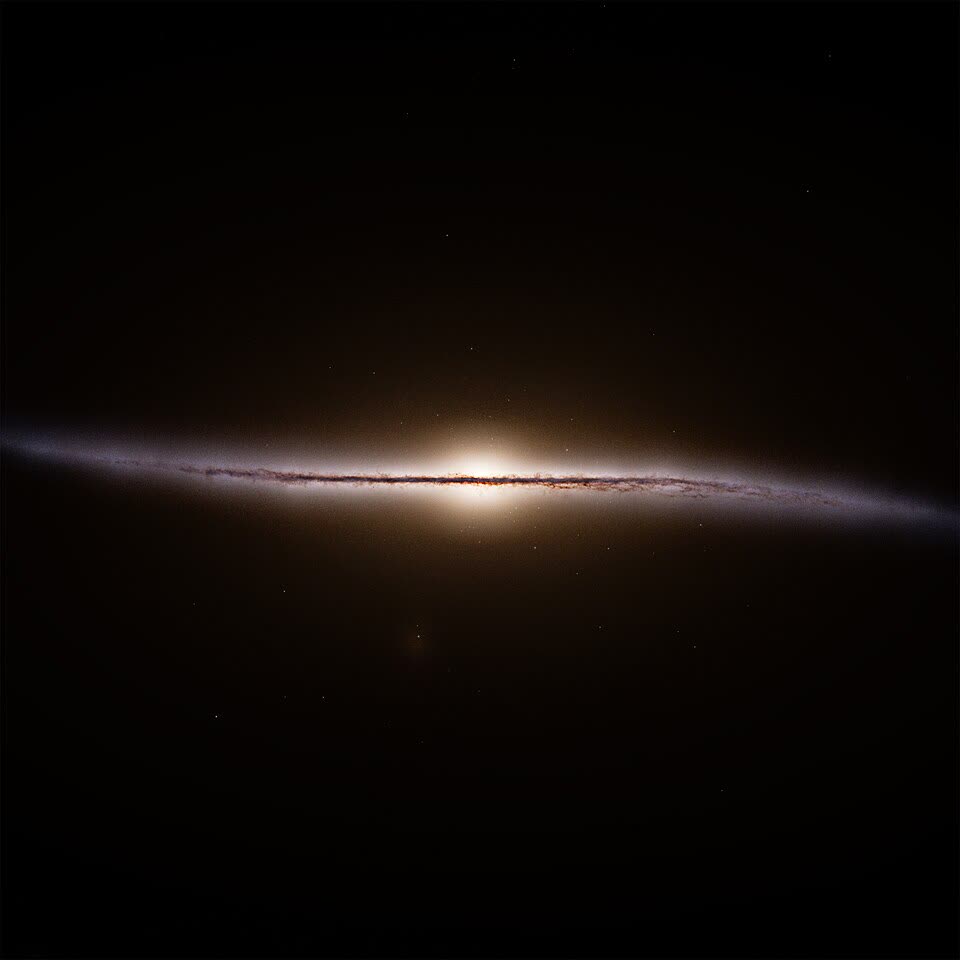
The astrophysics prize goes to Vasily Belokurov of the University of Cambridge, Amina Helmi of the University of Groningen and Rodrigo Ibata of CNRS and the University of Strasbourg. They showed that the Milky Way grew by swallowing smaller galaxies. Their evidence is stellar streams: long trails of stars left behind by dwarf galaxies that our galaxy's gravity tore apart. The way those stars move also reveals the pull of the dark matter that holds the galaxy together.
The nanoscience prize goes to Eva Andrei, Pablo Jarillo-Herrero of MIT and Allan MacDonald of the University of Texas at Austin for founding twistronics. Stacking atom-thin sheets of graphene and twisting one against the other changes how the material behaves without changing what it is made of. Andrei showed how twisting graphene layers alters their properties; by 2011 MacDonald's theory had pinned down a 'magic angle' of about 1.1 degrees; and in 2018 Jarillo-Herrero's team reported in two papers in Nature that twisted graphene at that angle conducts electricity with no resistance at 1.7 kelvin.
The neuroscience prize goes to Christine Holt of the University of Cambridge, Kelsey Martin, Erin Schuman of the Max Planck Institute for Brain Research and Oswald Steward of the University of California, Irvine. They showed that nerve cells make proteins locally, at the synapses where the proteins are needed, and not only in the cell body. Steward found protein-making machinery at the base of synapses; Schuman showed that strengthening a synapse needs fast local protein synthesis; Martin showed the same for connections strengthened during learning; and Holt found that growing nerve fibres can steer towards chemical signals even when cut off from the cell body.
Lund University is recruiting a PhD student to model planet formation across the Milky Way, and other salaried physics and neuroscience posts are on our funded positions page.