The Breakthrough Prize Foundation announced its 2026 prizes on 18 April in Los Angeles. Six prizes of US$3 million each recognised gene therapies, the genetics of ALS and dementia, the mathematics of waves, precise measurements of the muon, and a lifetime in theoretical physics.
Jean Bennett, Katherine High and Albert Maguire share a life sciences prize for the first gene replacement therapy approved by the US Food and Drug Administration. It treats Leber congenital amaurosis, an inherited eye disease that usually leads to total blindness in early adulthood, by replacing a faulty gene, RPE65, that the retina needs to respond to light. Patients treated more than a decade ago have kept their improved vision.
Stuart Orkin and Swee Lay Thein share a second prize for showing how fetal haemoglobin can be switched back on. People who keep making it as adults have milder sickle cell disease and beta-thalassaemia. Thein traced the trait to the gene BCL11A; Orkin showed that BCL11A shuts fetal haemoglobin off after birth, and found a control switch for it that works only in red blood cells. Editing that switch is the basis of Casgevy, the first CRISPR-based medicine approved for any disease.
Rosa Rademakers and Bryan Traynor share the third prize. In 2011 their labs independently found the most common genetic cause of both ALS and frontotemporal dementia: a short stretch of DNA in the C9orf72 gene repeated hundreds or thousands of times. It explains about a third of family cases of both diseases in European populations, and has made genetic testing possible for affected families.
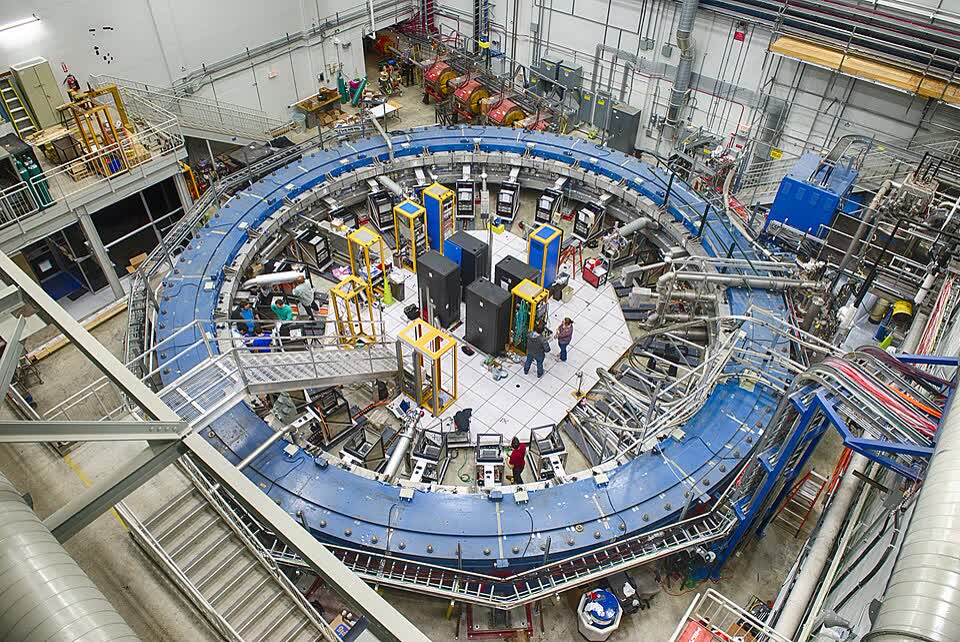
Frank Merle won the mathematics prize for work on the equations that describe how waves and fluids change over time, especially on singularities, where solutions blow up to infinity. With colleagues he showed that the defocusing nonlinear Schrödinger equation, long thought to be stable, can in fact blow up in finite time. The fundamental physics prize went to the Muon g-2 collaborations at CERN, Brookhaven National Laboratory and Fermilab for decades of ever more precise measurements of the muon's magnetism, and David Gross received a special prize for a lifetime of work in theoretical physics.
Gene therapy and precision physics both have salaried PhD posts in Europe; see our funded positions and our guide to how funded PhDs work in Europe.